designing new trading platform

Designing the Foundation for a New Trading Platform

Every decision was made with the next feature in mind, creating patterns that could support the platform as it evolved.

Role

Product Designer

TIMELINE

Mar 2026 – Ongoing

PLATFORMS

Web • iOS • Android  • PWA

focus

Platform Strategy • Authentication • Trading Experience • Design System

01

/

Starting with the Foundation

Building a Platform Meant Thinking Beyond Individual Features

FXCM already had a live trading ecosystem, but the new platform was being built on a new backend. We had to decide what should carry forward, what needed to change, and what foundation could support web, iOS, Android and PWA.

The new FXCM platform brought together everything I had learned from the Design System and Tradu. Instead of starting with individual screens, we started by thinking about the product as a whole and the patterns that would support it as it grew.

Although authentication became the first area we designed, it was never the goal of the project. It was simply the first building block. Every decision needed to support what came next, from onboarding and trading to portfolio management, AI features and future functionality.

Starting from the foundation also meant thinking across platforms from day one. Every flow needed to work consistently on web, PWA, iOS and Android while respecting the strengths and constraints of each platform.

The project was, in its essence, about designing the platform every future feature would build on.

02

/

Planning for Real Life

One Flow Quickly Became More Than Ten Scenarios

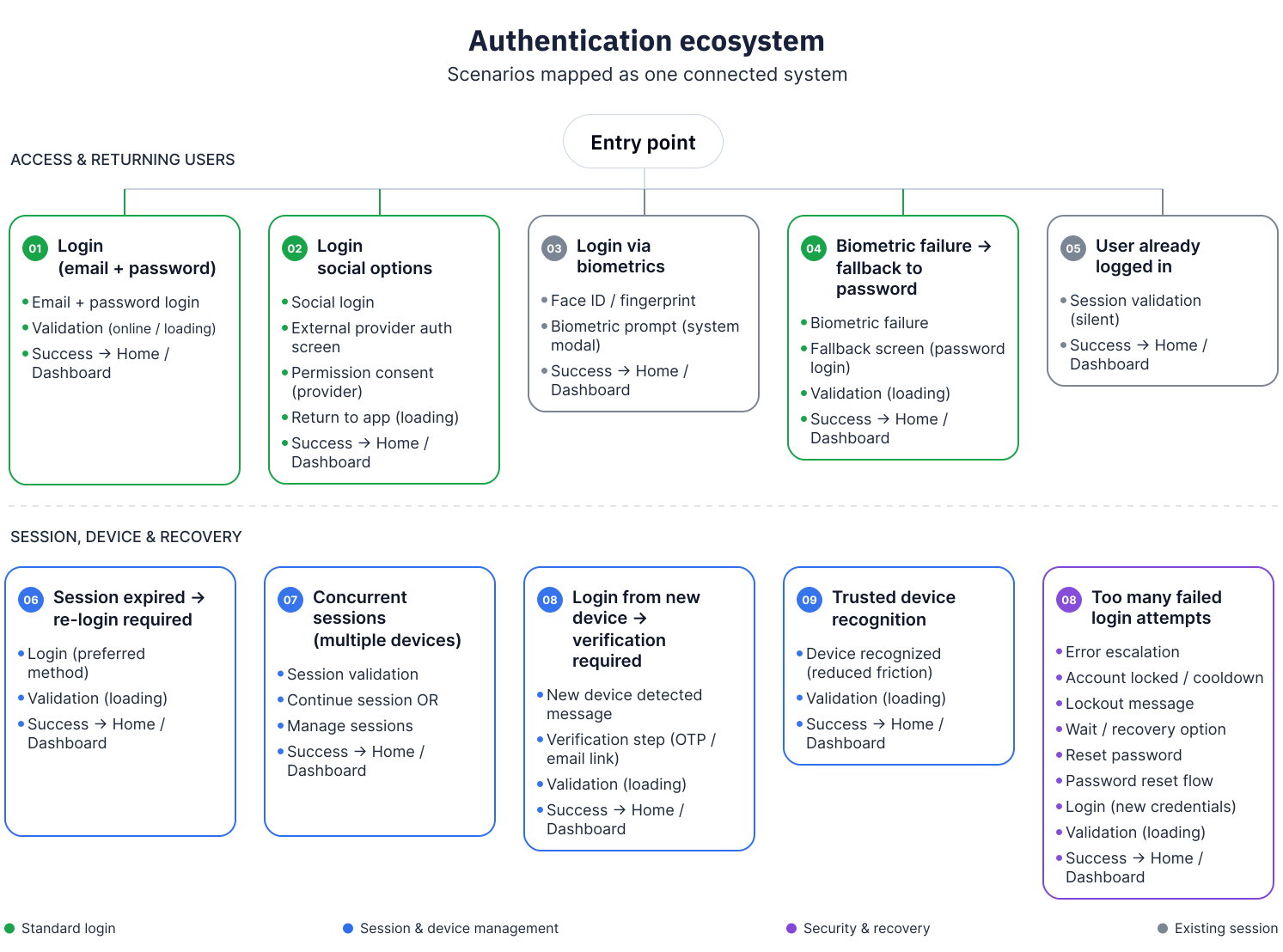
Authentication wasn't a single journey. It was a collection of situations users could find themselves in over time.

Creating an account was only the beginning.

Returning on a trusted device, signing in from a new phone, recovering an account, expiring sessions, enabling biometrics or deciding whether to trust a device all introduced different questions and different user expectations.

Rather than designing each scenario independently, I mapped them as one connected system. That made it easier to keep the experience consistent while reducing repeated design decisions as new scenarios appeared.

This also made conversations with engineering much easier. We were discussing one model instead of ten separate flows.

Designing how individual screens worked together took much thought.

Authentication established the product patterns that would later shape the rest of the platform, from navigation to trading.

03

/

From Access to Action

Designing the Core Trading Experience

Once the platform foundation was in place, the focus moved forward to helping users make decisions inside it.

The new platform wasn't being rebuilt screen by screen. Dashboard, markets, watchlists, portfolio and trading all needed to work as one connected experience.

I looked for shared interaction patterns that could reduce learning as users moved through the product. Navigation, layouts, empty states and actions followed the same principles, making different parts of the platform feel familiar without becoming identical.

That approach also made future work easier.

On native apps, biometric access could rely on the device. On PWA, the same promise needed a fallback when the browser could not recognise or trust the device in the same way. The interaction changed by platform, but the security model still had to make sense as one experience.

04

/

Turning Ideas Into Product Decisions

Every Feature Started with the Same Question

High-level product goals rarely arrive as design solutions. Turning them into something users can actually benefit from became one of the most interesting parts of the project.

Some directions were clear, others intentionally broad. Build a modern trading experience. Explore AI. Position the product somewhere between simple investing and professional trading.

Those statements defined where the product should go, but not how users would get there.

My role was to turn those ambitions into concrete product decisions. That meant understanding what users were trying to achieve, what the business wanted to offer and what could realistically be built within the scope of the project.

Sometimes that meant challenging the first idea.

Instead of asking where AI should appear, I started by asking what problem AI could solve for traders.

Several dashboard, search and AI ideas remained concepts while authentication became the immediate priority. Establishing a secure way into the product mattered more than making the future platform appear complete on paper.

05

/

Cross-Platform Thinking

One Product. Four Platform Experiences.

Consistency doesn't mean every platform behaves the same. It means users always know what to expect.

FXCM was designed for web, PWA, iOS and Android from the beginning. That meant balancing consistency with platform expectations rather than simply reusing the same interface everywhere.

Shared patterns helped create a familiar experience across the product, while interactions, navigation and native behaviours were adapted to feel natural on each platform.

The Design System provided the common language, but each platform still needed to respect the way people already used their devices.

The goal was a product that felt familiar wherever users accessed it.

A shared design language allowed web, iOS and Android to feel like one product while respecting the strengths of each platform.

06

/

PROJECT OUTCOME

A foundation built to scale from day one

10+

Security scenarios unified

1

Shared Foundation

4

Platforms Supported

Unified authentication
Authentication patterns became reusable across sign up, login, recovery, trusted devices and session management instead of being designed independently.
One experience across platforms
Shared interaction patterns created a consistent authentication experience across web, iOS, Android and PWA while respecting platform conventions.
Security made understandable
Security requirements such as trusted devices, biometrics and session management were translated into clear user journeys rather than technical workflows.
Built to grow
The authentication architecture established reusable patterns that can support future product features without redesigning the core experience.

07

/

Looking Back

Good Collaboration Makes Better Products

This was the first project where I could see the full benefit of everything I had learned before.

The Design System gave us a shared language and Tradu taught me how to approach complex product problems. On FXCM, those ideas became part of the everyday workflow.

Design discussions didn't stop when the screens were finished. They continued through implementation, often leading to better solutions than either design or engineering would have reached independently.

Seeing ideas become a working product changed my perspective on collaboration.

The biometric flow made the limits of designing alone particularly clear. iOS, Android and PWA could not support identical behaviour, and the final model had to combine one understandable security concept with different technical fallbacks. I would not have reached the same solution without engineering involved early.